
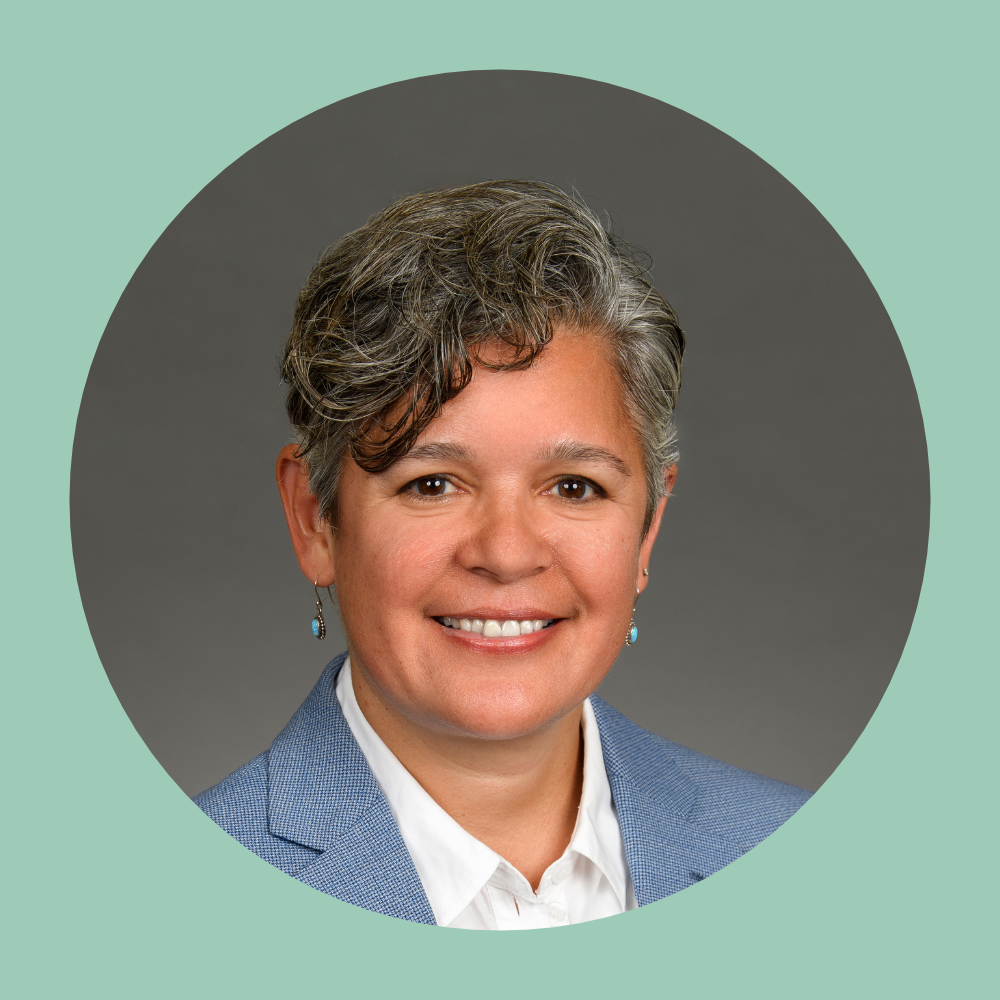
Kiren Shoman is the Executive Vice President, overseeing global editorial strategy for Sage UK’s book publishing and for Sage’s global digital learning resources. She is the global lead on Sage’s DEI initiatives, and has three decades experience of Social Science publishing. Kiren sits on the advisory board of Leading Routes. She’s currently reading ‘My Name is Lucy Barton’ by Elizabeth Strout, having fallen in love with her understated yet sharply observant writing style from ‘The Things We Never Say’.
“I like autonomy in my roles, and I need to be respected in the position I'm in and trusted to deliver what my role requires of me.”
You’ve spent your entire career at Sage, starting from an Editorial Secretary to now being an EVP. How did those roles prepare you for what you do now?
I’ve always wanted a complete understanding of the business and my career journey has given me that. In the US they often use this expression "soup to nuts", meaning the whole thing from start to finish, and sometimes it’s felt like that, having had the chance to see how the organisation works through a lot of different levels.
Experiencing the publishing process from different angles has been so meaningful because I’ve seen first hand how much hidden work there is. A lot has changed over the years, of course, but if you haven't done a particular job, it's easy to forget how much goes on behind the scenes. You turn on your laptop, and suddenly you're firefighting or helping to solve an author issue, and those aren't always the things people share with their manager. They're just handling them and getting the work done.
Across my roles, I've had a genuine love for producing content and working with people who care deeply about their ideas and what they're writing. Being able to look back and see work that has lasted, that's still being used, and that's still adding value — that’s been rewarding. Reflecting back, I recall getting to moments when I’ve become eager for the next role and looking ahead to the next opportunity. And those experiences and feelings helped shape how I wanted to manage people once I moved up.
I learnt that I actually hate being managed — or maybe I should say, I hate being micromanaged! I like autonomy in my roles, and I need to be respected in the position I'm in and trusted to deliver what my role requires of me. From my perspective, when I started to become a manager, it was about ensuring that the people I managed felt they had autonomy and respect to be able to deliver their work. I wanted to do a lot more listening to what their experience was and whether or not they needed any support, so that the agency lies much more with the individual.
Everybody who turns up to work is turning up as an individual who wants to contribute. Especially talking about knowledge work, they've earned their right to be there. They've proven their ability, their passion, and their interest so ensuring they have the opportunity to use their own thinking and bring their own perspective is so important. The people I'm working with should be, and will be, in charge of helping their work progress. My role isn't to do that work for them, but to be with them in the doing of that work.
“Having people across the company bring their own experiences into those conversations and ask questions about what we’re publishing definitely helps us create stronger content.”
Sage has a huge global presence, especially in the US. How important is it to have an international outlook in your publishing and how do you adapt this to different markets?
If we're going to reach a global, international market, it's important that we have a strong understanding of the needs of the different communities we're trying to support and serve. That recognition comes through in a number of ways: our outreach to authors, our development process, how we work with those authors, and how we think about representation among those authors.
For us at Sage, that’s why representation becomes ever more important. Having people across the company bring their own experiences into those conversations and ask questions about what we’re publishing definitely helps us create stronger content. We’ve done a lot of work around inclusive recruitment (including removing degree requirements), as well as with internships and fellowships to try harder to capture amazingly talented people that might not have thought of working with us, and we can see very clearly that the voices and experiences of our employees are meaningful in shaping what we build and how we deliver it.
Sage publishes journals and books of course, but we also innovated to develop a digital product line, and so we need to think about digital platforms and the user experience in a global context as well. Having people involved who understand accessibility and can ensure our platforms are accessible has definitely been impactful. It’s led to stronger products and given the libraries we serve greater confidence in what we're delivering.
So I guess for me, it comes down to thoughtful work on inclusion, being careful about market assumptions, and being open about where we can do our best work to reach international audiences.
Do you have an example of where you’re actively challenging gender bias through the work that Sage does?
Well one place we can do that is in what we actually publish, and as part of that, thinking consciously about who we publish. But journals are interesting because the key decision-makers are the academic journal editors, which means decision-making is much more distributed rather than coming from Sage directly. What I'm particularly pleased to see is the work our journals team does around data. Because the article submission process allows people to provide their own personal information, including their gender, in a way that's protected and secure, we're able to look at the data in aggregate and ask questions such as, “What does participation look like for women versus men across our journals?”, “What trends are we seeing in different disciplines in terms of authors as well as reviewers?” As a publisher we’re keen to examine and discuss this data with our academic editorial boards, so we can have good conversations and support efforts to diversify.
That helps us understand whether we're creating the conditions for the broadest possible range of strong author voices to be heard, and whether we're being as open as we can be to different perspectives and experiences. When you look at the data, you can see the gender bias. In the sciences — take engineering for example — the percentage of women participating in this scholarship is much, much lower than in, say, Criminology. But look at the social sciences, particularly in disciplines related to education, and you'll find a higher proportion of women participating in the academic review and publishing process. Sadly, it's not shocking because it fits with our broader understanding of how gender bias can work in the real world.
For me, that just immediately makes me think, “Okay, that's interesting! What can we do to address it?” If you're an editor in a field like engineering or one of the other sciences, who are you thinking of when you're looking for reviewers? Who are the people you're turning to as the experts who help evaluate and determine the quality of this content? For us as publishers, we need to think about helping editors to recognise that pattern and think more broadly about who they approach and who they see as experts in the field. Bringing it back to that point of being with people in the doing of the work, it’s about giving them the opportunity to reflect on their own practices and so having that data and sharing those insights back has I think helped us to actively address this across our publishing.
“being positive about AI isn't the same as being uncritical of it.”
Speaking of data, Sage, as with many academic publishers, seems to have a slightly more positive view of collaborating with AI companies than much of the rest of our industry. Why do you think this is?
I think academic publishers have probably taken a more engaged stance than it might seem trade publishers have. From where I sit (not knowing a huge amount about trade publishing), that's understandable as I think one of the key differences is the nature of the content. Scholarly research exists to be found, to be used, and to be built upon. If we want research to keep being useful, we have to be part of that.
It might help to separate the different ways that this AI collaboration is happening. One is letting a company use your content to train its underlying model, which is the kind most people have in mind, and they understandably picture big tech taking everything without permission or payment. The other is letting an AI research tool read our content so it can find the right article for a researcher and send them back to the source. We feel at Sage that part of our role as a scholarly publisher is to ensure through our engagement with AI companies that they see the value of publishers and the value of authors. That's why, where the training piece is concerned, we've pushed back against broad copyright exceptions and instead argued that this is something that should be licensed, with authors recognised and compensated.
A big part of the work of academic publishers is ensuring that peer-reviewed, citable material is available where it needs to be when people come looking for it. We need to ensure we're offering trustworthy content that can be retrieved in a way that's properly licensed and that allows the source and attribution to remain visible. If I'm doing research and decide that I do want to use AI, I want to receive citable material that I can then go and spend more time with as part of my research process.
That said, being positive about AI isn't the same as being uncritical of it. We're also constantly thinking about what a careful approach looks like. On the authorship side we require authors to disclose AI use — and there are real tensions around how some authors feel about AI, around accurate attribution of work, and so much more. So we need to stay focused on the challenges as they emerge.
As publishers, we have to think very carefully about how we handle those issues because we're ultimately in service to our authors and academic communities. We need our authors to trust us. We need academic societies we’re working with to know that we're going to continue providing value over the long term, and part of that value is helping them navigate this increasingly complex landscape — a responsibility we can't step away from.
Is there a mantra or a particular mindset you try and encourage when working with AI?
The phrase that you hear all the time nowadays is “human in the loop”, isn’t it, which is about not using AI without making sure that the humans are participating fully in whatever work AI is doing for us. The human needs to be conscious, engaged, using critical thinking skills, and ultimately directing what's happening. But actually, I’d much prefer if the more used phrase than “human in the loop” was instead “human in the lead”. I prefer that framing. That framing says “I’m the person making the judgments and I'm in charge” — AI is just a tool that I can use.
Most organisations, and Sage is no different, are encouraging people to engage with AI and understand what it can do. We want our staff to understand where it's valuable and where its limitations are, and I think it's true that there are many ways in which the tool can be helpful. It's important that we challenge ourselves to think about how to make the best use of it. But equally, I confess to feeling really worried about AI slop. My plea is: don't answer a question by simply asking AI to answer it for you. Be the “human in the lead”. Sometimes I get nervous when I see a simple question answered with a huge, lengthy report. My reaction is often, "Okay, let's come back to you. What do you think?"
One thing we used to say when all of this was first emerging was that we have a responsibility to our staff to make sure they're able to navigate a world with AI. Because wherever they go next, AI isn't suddenly going to disappear. The world is not going to wake up one day and find that AI has evaporated. We need to understand how to engage with it on our own terms, while also having a strong understanding of how it works, where it works well, and where it doesn't — and to challenge it on behalf of our authors and their work too.
“Ten years ago, the representation of Global Majority employees at Sage was 13% and we’re now at 30%.”
One of the other responsibilities you have when it comes to staff is to engage with employee resource groups for those from marginalised backgrounds — what have you learnt from working with ERGs, and how have they shaped the company as a whole?
I’ve seen first-hand the real impact they can have on the policies of the organisations they're part of.
At Sage, that has ranged from the way we think about caring responsibilities, parental leave, and returning from maternity leave, through to policies around menopause, breastfeeding, and prayer at work. ERGs have influenced us to create spaces and policies that respond to those needs. That's very important advocacy work, and it's an essential way of supporting staff. Hopefully, people feel they have the voice to say, "These are reasonable needs that I have, and I'd like them to be met."
ERGs have also done great work that isn't necessarily about changing policies — because let’s face it, a company can’t always be updating policies every other month. A lot of the value also comes from challenging how we're communicating about certain things. Our Gender Equity ERG, for example, has done a fantastic job of coming to the table and saying, "I'm not sure how the way this is being discussed is landing with us. Can we have a conversation about what this actually means?" That might be in relation to issues such as the gender pay gap or the ethnicity pay gap, and discussing where we're trying to get to. The ability to bring thoughtful and constructive challenges to an organisation is a core part of a successful ERG.
Most importantly, I think a large part of the work is simply being there. Sometimes I speak to ERG leads who are wondering whether they're being active enough, and I remind them that sometimes just being there is the work. Knowing that, if someone needs support, there is a community they can rely on, a community that is ready, knowledgeable, and able to help, is incredibly important. Providing that sense of connection and support is an invaluable part of the work as well.
Something people often praise you for is that you’re fully committed to DEI and in it for the long term, which must be such a lovely thing to hear! How do you stay optimistic but realistic about the challenges that still face our industry when it comes to hiring and retaining a diverse workforce?
It is a lovely thing to hear, and I know that's partly Josie Dobrin's doing, so thank you Josie. She called it being committed "in a quiet way", which I'll take, because I know my style can be lowkey (and sometimes I need to work on that and make it louder!). But anyway, I think of myself as naturally more of an optimist than a pessimist, which is quite helpful! I stay optimistic by trying to get back to the work and believing that, as much as possible, if I put in the work, the results will come.
There are absolutely times when it feels too slow, or like it's not understood, or that it's blocked. So then the challenge shifts and we need to reframe the question to, “Why is this feeling blocked, and how can we unblock it?” Sometimes the reasons are quite straightforward. It might be about resources, it might be about time, or it might be about misunderstanding. If that's the case, then it's about advocating for the resources, for greater understanding, and again just keeping focused on where we want to get to and what good looks like. That's what I try to hold on to as the inspiration. Equally, I think sometimes you've got to know what to put down. If you get to a point where you think, “You know, I just don't think I'm going to get this through”, which might hurt and that’s okay, but then the question can become, “What matters just as much that I can focus on instead, and where might I be more successful in moving things forward?”
It takes time. Ten years ago, the representation of Global Majority employees at Sage was 13% and we’re now at 30%. Those conversations we have with people, combined with a real commitment through policies and through leadership getting behind the work, can absolutely change things. That's how I try to keep my sense of momentum and keep going. There's always more to do. I don't think this work is ever going to be finished so it's about reminding yourself, “Okay, let me pick up something that I can push that little bit further down the road.”
What else do you look at when it comes to increasing that representation?
A very important part of the conversation about representation is being as clear as we can be about where we're looking. We need to be careful that we’re looking at different levels in the organisation, that we’re not just focused on the individual contributor level but not noticing that as you move up into leadership, diversity diminishes. That is something we still see, and it means there’s more to be done. It's about understanding how we hold on to that aspiration of representation being equitably distributed across different levels of the organisation because it makes a real difference having a variety of voices and experiences in different contexts, whether that's product innovation, editorial, finance, technology, or human resources. Having a vibrant mix of stakeholders and perspectives impacts how we approach and deliver the work.
Something that does keep me going is getting lovely feedback from people who are just starting out. They'll come in and say about the onboarding experience, "Wow, this feels great." They might be referring to the new employee buddy system most departments run, us covering our diversity, equity and inclusion work in their first day, or the fact that they quickly see they’re invited to join sessions our ERGs or the Office of DEI run on a range of key topics around belonging and inclusion, or — hopefully — looking around and feeling they see colleagues who look like them. Knowing that someone has that experience from when they first set foot in the building — that really does make a difference. Of course, making sure they still feel that way in years to come is super important too.
“I credit her with helping me discover why I fell in love with publishing in the first place.”
Tell us about a woman in publishing who inspires you.
Montserrat Casademunt, who is originally from Catalonia, came to Belize as a young person with her husband. Together, they founded a publishing company called Cubola, where they raised the profile of Belizean authors through books and stories. It was where I got my first job in publishing — I took a gap year before university and worked for her.
I was back in Belize in August and went to visit her and she’s just as she always was — a diehard publisher. She was pulling out all the books she's published, showing me this book that's being used in schools, then another one she's negotiating on, and then a novel about a young Maya girl that she's excited about. She genuinely loves what she does. She produces this amazing range of educational books for Belizean students, but she's also deeply interested in fiction and in helping Belize develop a stronger literary presence in the world.
She's a very impressive person, and I give her a lot of the credit for helping me realise this industry was a place where I'd be happy. My partner always jokes that I'm annoying because I knew what I wanted to do from the moment he met me. We met at university, and I already knew I wanted to work in publishing (though I didn’t know I wanted to work in academic publishing!), that I wanted to be in editorial, and the kind of career I wanted to build. And that's exactly what I ended up doing so I credit her with helping me discover why I fell in love with publishing in the first place.
The FLIP are proud supporters of independent bookshops and are an affiliate of Bookshop.org. If any of our recommendations take your fancy, we'd be so grateful if you click through our links directly to make a purchase as we earn a small commission - all of which goes back into bringing The FLIP's mission to life and to allow us to keep bringing you the content you want to see.
