Josie Dobrin
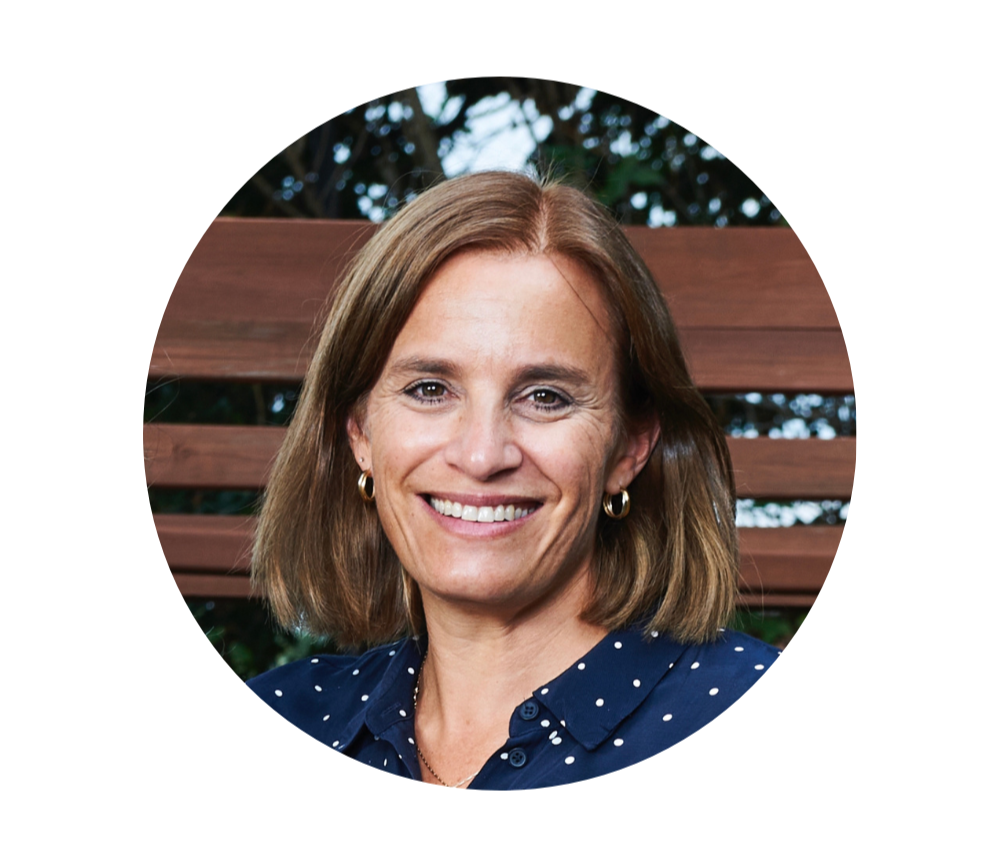
Josie Dobrin is a strategic consultant with many years’ experience working with corporates, government, charities and community groups. She is former Executive Chair and co-founder of Creative Access and the chair of the Publishers Association’s Diversity Working Group and of the Association of Illustrators.
She is currently reading ‘London Falling’ by Patrick Radden Keefe which was recommended to her by Sathnam Sanghera as the absolute must-read.
“One glimmer that comes up again and again is any time someone comes up to me and says, ‘I got this through Creative Access.”
What are the standout moments in the last 15 years of Creative Access?
There are so many moments that add up. One glimmer that comes up again and again is any time someone comes up to me and says, ‘I got this through Creative Access.’ I went to see David Hockney at the Light Room and the woman on the door recognised me and asked, ‘Are you Josie? I got my role through Creative Access.’ Or when I was sitting at home watching the 10 o’clock news on the BBC, and two of the lead stories were run by our alumni, Ashley Jean-Baptiste and Rihanna Croxford. Both had done such a solid job of bringing their own lived experience to how they communicated with contributors - it was such a ‘pinch-me’ moment. For our 10th anniversary four years ago, we had three parties: one for current trainees, one for alumni, and one for employers – and each one was such a celebration of change and progress.
Another significant moment for the organisation was when we stopped being a charity in 2017 and became a social enterprise. That was driven by government funding being removed, but it gave us an opportunity to take stock and widen our remit as well as change our funding model. When we first started, we were only supporting people from racially minoritised communities. But we knew that the issue in the creative industries was much bigger, and we wanted to focus more on intersectionality and the people who were most marginalised, such as those from lower socio-economic backgrounds or with disabilities. That’s when we widened our eligibility criteria and evolved our offering. It’s now much more of a 360 degree approach, supporting employers as well as individuals.
Without government funding, we now charge organisations to deliver training or to recruit through us. We don’t charge individuals, and although we still get some donations and sponsorship, the bulk of our income comes from that transactional model. To be honest, when we closed the charity, I was ready to leave, but the board convinced me to stay for six months. I thought, ‘Okay, let’s see if companies will be willing to pay.’ The truth is, people value things more when they pay for them! They’re more invested and more intentional about what they’re doing. That six months turned into another 10 years because there was a huge amount of scope. Having a diverse workforce was part of the zeitgeist and had become more of a business-critical facet for organisations to consider their workforce more than they had before.
How has the landscape of the creative industries changed since you’ve started the work CA do?
One of the things that has obviously changed is the boom of the creator economy, such as the rise of endeavours like self-publishing. This means the gatekeepers of big publishers or studios have shifted, because people can go direct to consumers, whether through social media or elsewhere. Specifically in publishing, attention is becoming harder to capture. There’s a lot of competition across all creative industries and it’s harder to stand out now that there’s so much content out there.
I’d be remiss not to mention AI, which is of course a massive challenge to all creative disciplines. I don’t think anyone is clear yet on how much it will change things in the years ahead, but there are some great campaigns at the moment calling on the Government to put fairness at the heart of their approach to generative AI. The Society of Authors are running a brilliant Human-authored campaign and are also part of a coalition including the Association of Illustrators which recently launched a report on the impact of unregulated generative AI on creators. Building into that is how we look at sustainability and ethics. Sustainable working is important, from book production to global distribution. All of these have been massive changes at a macro level in the last 15 years and will continue to drive how we adapt to new challenges in the future.
“There will always be a place for strong leadership. Poor line management is often cited as a reason for mental health struggles, so emotional intelligence, and making room for every voice, is absolutely essential.”
What does that mean for the future workforce? What skills will be important for them?
People need to be continually creative, and we need to prioritise human interaction. I hope we learn to work with technology and evolve. The fact is that young people entering the workforce need different skills than they did 15 years ago or even five years ago. There was a report from the Institute of the Future that said 85% of people working by 2030 will be doing jobs that don’t yet exist, which is extraordinary. I do understand that it is tough out there but I think there are some skills that everyone will need to cultivate in order to remain responsible and relevant.
In terms of what people will need, it comes down to an ability to develop new competencies. We have to be constantly evolving and unlearning assumptions so we can rebuild and reshape. Problem-solving skills, thinking outside the box, and innovating formats and accessibility are so important. Creativity will help us stay resilient, but we need to balance that with critical thinking, especially analysing and fact-checking AI-generated content. There’s so much data nowadays, so understanding what data means, and how to collect and store it ethically, is increasingly valuable.
There will always be a place for strong leadership. Poor line management is often cited as a reason for mental health struggles, so emotional intelligence, and making room for every voice, is absolutely essential. All of this requires resilience, flexibility, agility, and motivation, especially when times are tough. In a world where crises are becoming more frequent, employers need teams capable of handling stress, adapting to uncertainty and managing complex social dynamics.
Over the last 15 years, CA has placed people in TV, Film, Music as well as the publishing industries – what do you think we could learn from our peers in other creative sectors?
Working across industries has actually been one of the most interesting things for me. My heart belongs to publishing because I’m such a reader, but I do see a lot of different best practices.
Some of the things that work well from film and TV are structural learning, standards and mandatory requirements. The BFI, BBC Film and Film4 all require you to demonstrate that you’ve met certain criteria, such as having trainees or a percentage of your workforce from particular backgrounds, in order to access funding or to be included in their lineups and programmes. In publishing, it can be easy to end up with campaigns where a lack of a central structuring means that it becomes even harder to embed diversity beyond special initiatives.
The music industry is brilliant at community-led advocacy. It’s heavily focused on grassroots and freelancers, and they have strong support systems there to build up talent and bring the next wave of creatives up. Because of the creator economy, and the struggle to find full-time work, we’ve seen an increasing proportion of freelancers. That means there’s a need for more flexible work structures and different support systems than what existed before.
The most recent Publishers Association workforce survey showed concerning data around the rate of retention of people from underrepresented communities; Global Ethnic Majority and disabled talent, as well as people from lower socioeconomic backgrounds, are still massively under-represented in mid to senior roles. A 2023 report by Literature Alliance Scotland showed 93% of freelancers agree the sector relies on freelancers, but the majority of freelancers do not feel valued by the sector. It’s for these reasons that I’ve been trying to build support for publishing freelancers over the last few years, launching an initiative to provide ongoing professional development opportunities for them – typically much harder to access when you don’t work for one organisation. A group of 10 trade and academic publishers have come together to sponsor 15 publishers from under-represented backgrounds to participate for the past two years – that’s something I’m really proud of developing.
Do you think there is a danger it can become tokenistic?
I remember, about 15 years ago, our very first trainees at Penguin Random House coming up to me and saying, ‘I've got a degree from Cambridge, but people are telling me that I'm only here because I'm the token hire.’ That was one of the first dilemmas that really challenged us.
That's partly why we started working alongside organisations, so these things come hand in hand. It’s not about just empowering you as an individual and getting you to build up your own skills, it's also about working with the organisation and saying to them, ‘Look, you need to create an inclusive environment for somebody to be able to thrive in that workplace.’ So absolutely, I do think it can be problematic, but the truth is there is no single panacea. Sometimes we will get big organisations requesting trainees simply to change the face of their workforce. That is just not good enough. They're not doing anything to actually help those individuals really progress through. It's not a straightforward situation, and there are some organisations that do it absolutely brilliantly and others that are sadly leaving a little bit to be desired.
“The main priorities [for supporting AND RETAINING a diverse workforce] should be consistency and parity.”
What does it look like for publishers today to support their workforce and retain diverse talent?
The main priorities should be consistency and parity. Making sure there is consistency around progression pathways, access to training, promotion, salary increases. Even if you’re a small business, it’s important to interrogate that data so that you’re not shying away from the facts. Who gets promoted and when and why? Are there clear job descriptions about what happens? Is there an individual training allowance? Who gets invited along to events? Is it only those who don’t have caring responsibilities, for example? Having access to that data then means we can identify the reasons you are succeeding or failing at retaining diverse talent. For example, after we saw the results of The Publishers Association’s workforce survey that I mentioned earlier, we followed the data up with focus groups about why people from racially minoritised communities are leaving the sector. While there are many reasons, it does all boil down to a lack of role models, transparency around salary, career progression and what the future might look like for someone from an ethnic minority background at their company.
We talk a lot about microaggressions, but tend to neglect micro-affirmations – what are the little things that support people to progress more and help them feel valued and that they belong? That sense of value and belonging is hugely important. People want that so much. They want to feel that they’re actually doing a good job and that they’re important to the organisation. Finding ways to do that, creating feedback mechanisms so people can honestly report back how they’re feeling, having check-ins can all be the difference between someone staying and leaving. My whole MO is that every time someone does something good, I will credit them publicly, ensuring I’m equitable about it because there’s nothing more gratifying than people being recognised and saying, ‘Oh my God, so-and-so thought I did a good job.’ To use an example from my own life, my youngest daughter is in the middle of her GCSEs at the moment, and she got some good feedback for her coursework. Suddenly she’s energised to prepare for the exam better because she feels like she can do it. It’s just so fundamental for all of us and I always try to lead by example. If you empower others, you keep that cycle going. Since I’ve announced my leaving, I’ve been so touched to receive so many messages from people saying, ‘You believed in me when others didn’t’. I know it might sound a little arrogant but I just know that it truly pays dividends to be like that.
Do you have a career ‘sliding doors’ moment? What did it teach you?
There have been several, but the most important one is the year after I graduated. I studied speech therapy and psychology at university and I wanted to go into deaf education. I had a place to do a masters, but it wasn’t until the following year so I went to a temp agency and found work with a PR firm. They had taken on the ‘Rock the Vote’ campaign to encourage youth voter turnout in the election. Because it was a pro bono campaign, they let me, the young graduate, work on it because they didn’t want to put any of their resources on it. I absolutely loved it and just ran with it and it went so successfully that they offered me a permanent job. That was a real moment of, ‘Oh, what should I do now? Do I go back and do the masters?’ I guess you can probably tell the route I took but it was just serendipity that I was given lots of responsibility quickly – but it really did play to my strengths and gave me a route into this industry.
I’ve already mentioned this one, but there was a moment when I nearly walked away from Creative Access – but I’m so glad that I gave it those six months. When we closed the charity and Pan Macmillan committed to giving us £30,000 over three years of seed funding, it was enough to give us a little bit of money to start, and that faith was what started us off. I thought, ‘Okay, I’ll just see what happens.’ I like a good challenge, being entrepreneurial and setting things up. I’m really a relationships person and I thought that if this is about building relationships, then I can do that and I’ll see what happens. We broadened our remit and thought about training and working with employers and the amazing thing was that even within a couple of months I could see that things were working. I took that opportunity to dismantle things to start building again but this time with an even more important mission.
COVID was also something that – although it was horrendous – did teach us how to be much more accessible, working online more effectively and enabling us to reach people with disabilities or outside of the Capital. Obviously after George Floyd’s murder, that was another crazy moment in time for us where everyone suddenly decided they needed to make an effort and we had so many organisations contacting us and it was quite unwieldy. The appetite for inclusion initiatives has waned a little since then – perhaps this is the new normal – but we do want to see this effort level increase over time.
Those moments of zero to 100 are these big moments in time that taught me how to look for growth and then seek stability. I was diagnosed with breast cancer just two years ago, so I had surgery and treatment after, and that was a moment when I maybe could have left but there was so much going on and I didn’t want to leave without a good team in place. We’re finally in a solid position now which is why it feels like the right time for me to leave and start a new chapter.
“you’re never ever alone. There are so many great people out there that are willing to step in to support you at any point.”
Have there been any barriers you’ve had to overcome in your career, and what did they teach you?
Unfortunately, with the kind of work Creative Access does, there are always going to be naysayers. There are people who just don’t believe in it, and it’s extremely hard to bring people like that on board. There’s so much evidence that it’s not just a worthy philanthropic endeavour; it genuinely makes a difference to your workforce. It’s not rocket science that you need people with different lived experiences to bring creative ideas. You cannot have a homogeneous group. Whether companies choose to act on that is a different issue but when they do, we’re there to help them put those best practices in place to break down those barriers. What we’re seeing now is that because of financial pressures, people may be less willing to invest in big initiatives, but I feel confident that the underlying ethos of inclusivity is now much more embedded.
As for lessons learnt on a personal level, I first started Creative Access with two men. I was quite introverted back then and hated public speaking, so I never got up to advocate for myself. I very quickly realised that although I was the one doing so much of the work, I wasn’t being credited for my contributions fairly. There was very much a kind of male-female dynamic there and I just desperately wanted to challenge that. I had to give myself a really strict talking to and ask, ‘Why should they get so much of the credit?’ It is true – the more you do it, the better you get. Now I’m not fazed by talking in front of a group of people, but it did not come to me easily. I’m one of three sisters, I’ve got three daughters, and I feel strongly about advocating for women, working with women, finding equal opportunities and leaning on others.
That’s one thing I would say, you’re never ever alone. There are so many great people out there that are willing to step in to support you at any point. It’s been such a gratifying journey and it wouldn’t have been possible without the army of people that have supported Creative Access to get it to where it is, from our interns and our alumni, to our mentors, to our employers, to the board members, to the team. There are just so many people out there who will help you if you need them. My ethos and core value is doing unto others as you would like for yourself. I always try to say yes to things and to help others. There are a million fledgling organisations or people at start-ups, and if I can help you for half an hour by giving you the benefit of my experience, I will always do my best to do that. Everyone has their own experiences and their own privilege, so I also try to learn from other people. Listening has helped me to understand the challenges and hopefully try to advocate for other people to break down barriers. Ultimately, all I am is a conduit to try and support others to make the best of – I believe that everyone has the right to access the same experiences.
Tell us about women in the creative sectors who inspire you.
This is a tough question as there are so many, but here are a few…Kiren Shomen is the VP at SAGE Publishing, where 30% of their workforce in the UK are from the Global Majority, which is just brilliant. She is so committed in a quiet way, and fully in it for the long term – her way of working is thoughtful and considered and she’s just always got on with the task at hand.
Lynn Blades is an author and the first Black woman on the couch at CNBC in America. She is absolutely fearless and just calls it out exactly how she sees it, and I’ve always respected her fierce loyalty and appreciated the way she’s championed me.
Liz Warner was the Chief Executive at Channel 4 and Comic Relief – you might have seen her in the news, where she fought for her autistic son to get properly paid at his job. She’s since set up a social enterprise called Different Kind, which sells things from ethical and socially minded producers. She just walks the walk and gets sh*t done, and she recognises that whatever privilege you have, you have to use it for the good of others too.
The FLIP are proud supporters of independent bookshops and are an affiliate of Bookshop.org. If any of our recommendations take your fancy, we'd be so grateful if you click through our links directly to make a purchase as we earn a small commission - all of which goes back into bringing The FLIP's mission to life and to allow us to keep bringing you the content you want to see.
