
Jasmine Richards
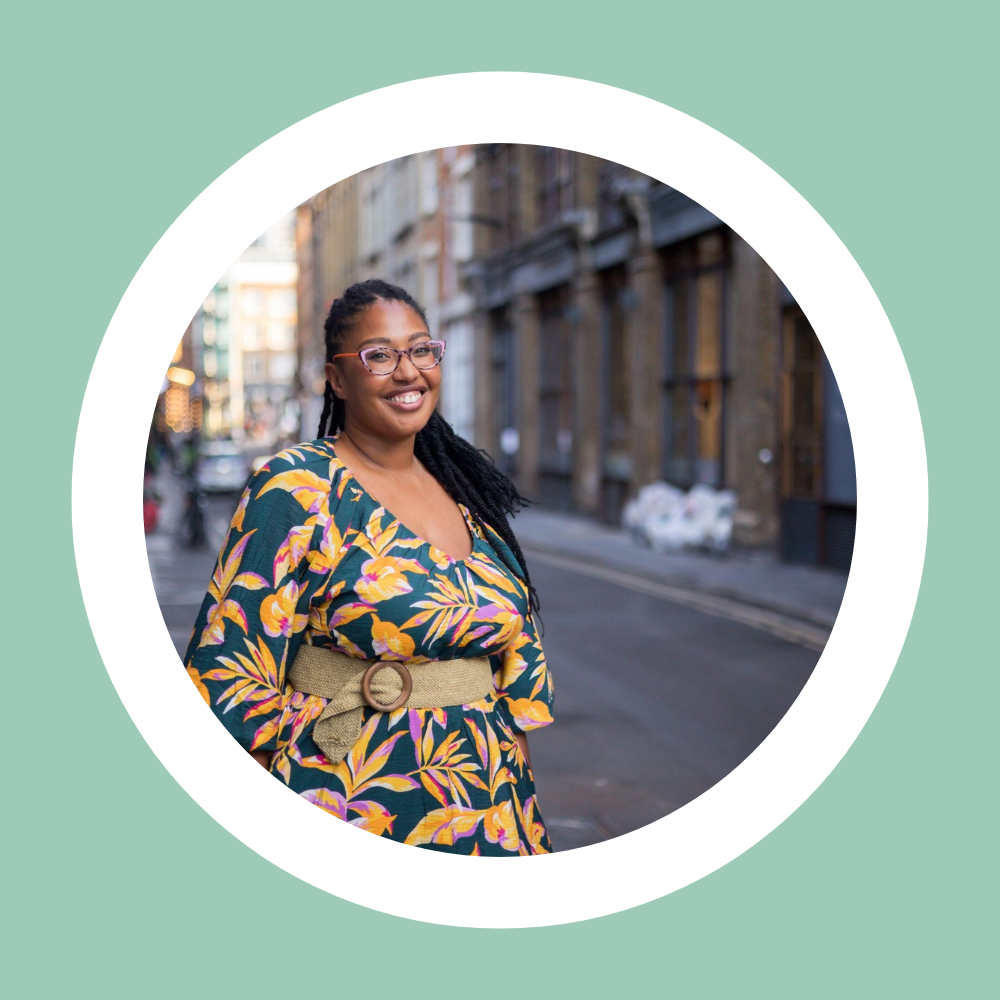
Jasmine Richards is an award-winning author, editor and the founder of Storymix, an inclusive fiction studio and book packager creating joyful, adventurous stories for children and young people. Through Storymix, she works with leading publishers to ensure more children can recognise themselves in the stories they read.
She has worked in publishing for more than twenty years, including roles at Penguin, Working Partners and Oxford University Press, and has written more than fifteen books. Her screenwriting credits include Disney’s PJ Masks and the BBC’s JoJo & Gran Gran.
She is also a Bookseller Rising Star, Trustee at the National Literacy Trust and the creator of The Write Beach Hut, a creative sanctuary by the sea which is designed to nurture and empower writers and creatives through workshops, mentoring, and affordable writing retreats.
Jasmine is currently reading the cosy Dream Harbor romance series by Laurie Gilmore because of the pure escapism, and just finished the ‘Cinnamon Bun Book Store.’ She is also reading Dystomance novel 'I Feel Your Pain’ by A.M Ellis. She’s read it at the copyedit stage but is totally in love with the package and has been enjoying reading it as a proper book!
“The work wasn't only about who gets to be the stars in these books; it was also about who gets to write and illustrate them.”
Storymix was born out of a personal frustration — not being able to find books for your son that reflected him. Looking back on the journey so far, what have you got right?
Storymix certainly came out of that particular frustration, but also the wider frustration and annoyance I had both at the industry and at myself, for being a part of the problem having worked in publishing for over 15 years.
I was already a published author both here and in the US, where most of my books were published. So when I was standing angrily looking at the bookshop shelf with my five-year-old, I knew there was a version of the world where I could write novels to help change it. But I’m really slow – like one book every 18 months — and I wanted to change the shelves as quickly as possible. I had niche experience as a book packager (someone who develops original book ideas, assembles the creative talent to bring that idea to life and through editing and collaboration turns those concepts into publication-ready manuscripts for publishers) which not that many people in the industry do, so hit upon that experience to help accelerate change.
My first idea, probably because I’d been in publishing for such a long time and was — I’m going to say it — surrounded by whiteness, was to come up with series ideas that featured black and brown protagonists but get authors from any background to write them. I could go to all the super fast, talented writers I’d worked with before, create all this intellectual property (IP) and get the books out. Then I thought ‘Well, hang on Jasmine, it’s not just that there aren’t any protagonists of colour in these books… When you go to publishing events, it's just you in the room. When there is representation in books, with just a little bit of digging, you learn that it is white creators, probably with the most well-meaning intentions, behind them and sometimes, when you’re reading these books with your son, you feel as though the characters have just been shaded in.’ I knew all of those things to be true so why did my head go there first? I had some unlearning to do and maybe I also knew that those writers hadn’t been surfaced in a way that made it easy for me just to scoop off the top and get going. It would be much more work to find these writers that publishing hadn’t bothered to find or nurture.
But the work wasn't only about who gets to be the stars in these books; it was also about who gets to write and illustrate them. So I formed an idea that Storymix could be an apprenticeship or launchpad or incubator, whatever you wanted to call it. I could nurture a collective of writers who would work on our titles, but then launch their own careers and do their own things.
Our mission statement is to increase the number of books with a protagonist of colour and to increase the number of creators of colours who make kids’ books. I feel like I've done that bit well. I've worked with, or “discovered” (in bunny ears, because they’re not really discovered), brilliant writers who've then gone off to do brilliant things in their own right. And whatever happens, that is a legacy that I'm really, really proud of.
And what did you underestimate?
In 2020, after the murder of George Floyd, my phone was ringing off the hook and everyone was asking me, ‘What have you got, Jasmine?’ I always knew that interest wouldn't be sustained at that level and that it was a bit of a moment. What I underestimated though is just how quickly that would end and how far back we would ping, to pre-2018. It almost feels worse than it was before. And maybe that’s because I saw how good it could be when there’s will and interest. So that makes it feel worse. But I just underestimated how quickly any gains we made would be lost, really.
“Really, what becomes mission critical is being sustainable.”
There was so much impetus and momentum so that is sad to hear. But leads quite well into the next question which is, when it gets hard, what do you do? How do you keep your mission alive as you’re growing your team and your business?
To be brutally honest, one of the first things that we had to do was actually change that mindset about growing the business and about growing the team. Really, what becomes mission critical is being sustainable. What we’ve seen in the last 18 months is that so many companies championing marginalised writers and illustrators, Knights Of, The Good Literary Agency, Tiny Owl, Pop-Up Pathways etc, have closed.
When the environment is like this, you’ve got to make some really tough decisions about size of the team as well as size and scope of output. And not just thinking about whether things are financially sustainable, but also emotionally and mentally sustainable. Because I can’t work double the amount of hours to keep the show on the road at the level that we were at before. I have to accept that there are macro things afoot and I can’t fix racism. That took a beat to figure out. And now, if we can remain and be here in another seven years, if we still get to make some books, even if it's not quite as many books, that fulfil our mission, and if we still get to nurture and develop and launch talented writers and illustrators from minority backgrounds, then that is great. Even if it’s smaller.
You’ve recently launched Storymix Books after seven years of selling to publishers. Why have you made that decision now, and what does that say about where the industry is at the moment?
It’s all been such a journey.
We have a title in development called The Other Father Christmas, which is a gorgeous middle grade novel. Imagine Charlie and the Chocolate Factory, but instead of inheriting the Chocolate Factory, you win the prize of being the next Santa. Mikey enters his grandfather into the competition, who had for years been running the grotto in the local community centre with his late wife Claudette. The journey of the book is both Mikey understanding that Gramps will be forever changed because the love of his life has died and Gramps understanding that he can still love Christmas.
It’s a bloody brilliant manuscript but I just could not sell it to publishers. Editors were saying, ‘This really made us laugh, made us smile, made us cry. It’s just quite niche.’ But for me, the themes are so universal. What’s “niche” about it is that Santa ends up being black. Well, actually, spoiler alert, Santa ends up a job share between Gramps and a Filipina former vet. So when the conversations were ‘We just think we will struggle to find this audience,’ it felt like bullshit. I’ve worked in the industry for 20 years and knew The Other Father Christmas was great.
I hadn’t felt as furious since I stood in that bookshop with my son and started Storymix. That same energy appeared again. So I got a grant, did a crowdfunder and am extremely proud of what we produced. I think we will publish other books using that model, a mix of grant and crowdfunding, but no more than one a year. I mean, it was so much work! While Gardners/Bounce did the paperback distribution, I was packing envelopes with the hardbacks and posting them out. I don’t really enjoy that, but I just had to because I needed to prove that I was right about this book and I needed to get it into the world. So I made it happen.
Love that resolve — know what you want and go after it. Moving on, Storymix works in a non-traditional way, more akin to a film production studio than an agency. What drove that choice?
I definitely knew I didn't want to be an agent, even though I deeply respect what agents do. I think I really understand kids' publishing and what works, and I didn't want to just wait for the right thing to come across my desk. I wanted to make books that filled the gaps I was seeing.
Because I'd worked in-house, I knew how expensive paper was and how difficult distribution could be, so I didn't want my deliverable to be a physical book. If I sell an idea to Penguin or HarperCollins, my deliverable is an edited Word document. We might have some involvement in which illustrator is commissioned or the cover, but most of the time that sits with the publisher, and that was fine with me. That felt doable without seed funding or deep pockets and I knew I could do it well. I know I have good ideas and I can edit and, as time went on, I began working with other editors who are brilliant at author care, editing and ideas.
Trying to scale a publisher, on the other hand, is so expensive. I still haven't been paid for books I sold for The Other Father Christmas — the selling period was from October to December and we're nearly at the end of June with no income from books sold yet. That's how long it takes, and it's no surprise that small indies go under with cash flow like that. That's why I still love the packaging model even if we do a bit of publishing now.
“I wanted to make books that filled the gaps I was seeing.”
How do you hold the line between your original vision and the writers' creative instincts?
Most packagers are strict in how they work with writers, but I've decided to follow the energy of each project. Some writers need a super detailed storyline and a lot of support to get there, because they're still building their writing muscle. Maybe on book one they need a hugely detailed storyline, a ton of line editing, sometimes even rewriting, but by book four they're flying. That's what I mean about the apprenticeship model: instead of just running a scheme that says ‘black and brown writers, come and be writers,' they actually get paid to write, learn what it means to be edited and how to respond to an edit, get better, finish the contract with us, and then go off and do their own thing.
But then there are other writers, like Joanna [J. T. Williams], who wrote the Lizzie and Bell Mysteries, who is fully formed and just needed someone to open the door a crack for her. When she sent in the manuscript and said she hadn't really followed the storyline, my first thought was, 'Oh crap,' because that’s usually a redline for a packager. Then I started reading it and thought, this is far better than the storyline we provided – it was brilliant. So instead of being strict about it, I just go with the writer and the project to make the best thing we can. That bit of flex has served us really well.
Do you personally do most of the idea development or do you have people on your team who help with that too?
When I started, it was just me coming up with ideas — we call that the springboard. Sometimes we'll create a pitch deck with visuals about the character and the world, and what the hook is. I'm good at coming up with the hook, so a lot of the early ideas definitely came from me. But as we hired people and grew, ideas started coming from other people too. Every six months we have a development week where people put ideas on the table, and we follow the ones that feel the most exciting and develop them almost like a writer's room in TV where everyone's brainstorming and building it out.
I really love looking for the gaps in the market, or seeing a trend bubble up. I find that these constraints, for example knowing I need to find something for a seven-year-old and developing that based on what I’ve noticed about what’s popular, help make me more creative.
“If you're not building a plan that not only breaks out a new writer or artist but also includes their continued growth, you're doing a massive disservice to that individual and the wider cause of improving inclusion and representation as a whole.”
With your experience building a team and working so closely with emerging writers and illustrators, what do you think is still the biggest barrier to entry?
I think it's about a commitment to sustained interest — it's a general issue within publishing, but exacerbated when you're a creator of colour. If you're not building a plan that not only breaks out a new writer or artist but also includes their continued growth, you're doing a massive disservice to that individual and the wider cause of improving inclusion and representation as a whole.
We've published over 22 separate projects now, so I've got my own data set, but I also talk to people, and there's a clear pattern in how books by black and brown creators sell abroad. If you're lucky you might get a US sale, and you might do alright there — it's a brilliant, massive territory. But the US and UK are very different countries, and since Trump and the book bannings, it's harder now to sell a book in the States as a British creative. If you look at the rest of the world — all those other territories you might pick up, Croatia, Germany, Spain, Italy, Poland, sold in 15 or 18 or 20 territories — that rights profile just doesn't happen in the same way for black and brown creators. So the authors then don’t have all those other rights deals chipping away at their advance; it has to be earned out by that American sale and whatever happens in the UK, which often takes much longer and means it can be harder to secure their next deal.
Then there's the UK market itself. Publishing is really good at selling to specific demographics — they know how to market and sell those books. But I've seen it with my own eyes in bookshops, especially in white areas: a child picks up a book and the white parent says 'Sweetie, I'm not sure that one's for you.' The kid says it looks exciting, and the parent steers them towards some unicorns instead. And perhaps that’s because that parent is worried, possibly without even being aware of that worry. They've seen a black character on the cover and they're worried it might talk about racism, and then they won’t have the ‘right’ answers if their kids ask them questions. I'm obviously being a bit facetious, and I'm not speaking for everyone, but there is still a resistance in some of those bookish families, even if it's subconscious.
So you've got your writer of colour who has written a brilliant middle-grade adventure but the access to that white readership isn't as unfettered as you'd hope. Then the question becomes how you reach other communities and publishers don't know. It's not that black and brown readers don't go to Waterstones or Foyles, of course they do, but there are whole swathes of the population that publishers don't know how to reach. And I've watched marketing spend shrink and shrink. In the good old days you'd be invited in for a cup of tea and biscuits to talk through the marketing and PR plan, now I'm struggling to even get the name of who the marketing or PR person is.
That writer is challenged on all fronts, and then they get to the end of their two-book contract having not sold enough copies, and publishers say they can't possibly commission another two books. And that’s where we find ourselves right now.
Individual people in publishing are largely fine — there are some bad apples, but most people are all right. It's the system they operate in that's the problem: who gets to be centred, where the power sits. It's not a system that wants to change, because it doesn't serve it to change. I used to try the business case — there's money on the table, talking about the black pound, the Asian pound — but I don't think they even believe that exists, so that argument doesn’t work either.
I can't fix the bigger system of racism and I can't fix publishing. I've done the keynotes, I've done the imploring — we're all individuals making small decisions, you can affect change — but unless I'm sitting on someone's shoulder when they're writing that rejection, I can't fix it. I can only do what I can do in my little corner, and give what I can give. That's where I've landed, and it took a while to get there.
“It's the system they operate in that's the problem: who gets to be centred, where the power sits. It's not a system that wants to change, because it doesn't serve it to change.”
Before we wrap up, you became a trustee of the National Literacy Trust (NLT) this year, right as the National Year of Reading launched. What do you think it actually means for children who don't already see themselves as readers?
I think the NLT has done a great job over the first part of the year talking about the importance of choice and autonomy for young readers — I hope that is something that we continue to focus on for the rest of the year and beyond.
I've also been thinking about all the different ways kids consume stories. I'm a mother myself and I see how my children are in the world. I think there seems to be a separation between books and all the other fun things kids do. Things like watching YouTube or Netflix or playing Fortnite feel social — I can hear my son and his friends screaming from his room, having fun together — while books are all the way over here on their own. That connective tissue between what's fun and communal about the world of books, like talking about the books and inhabiting the world together, has been broken.
What I'd love to do at Storymix — and I don't know if I've got the technical skill for it yet — is take our story worlds and think about how they could exist as virtual or even physical immersive worlds. In The Other Father Christmas, there is a gingerbread escape room. I'd love to build a real gingerbread escape room that a kid could enjoy and then think, hang on, there's a book — maybe I'll read it, maybe I'll listen to the audio, maybe there's a game too. I think there's something in building bridges between books and the other things kids do. Is there a way for us to bring kids to the book then allow them to go through the book and create a lovely, circular thing? Books then aren’t left as the estranged member of the family but are in the gang too.
That's obviously happened really well with some massive IP already, but I think about how we could do that on a smaller scale. Purists probably wouldn't like it — they think the book is the book — but I don't think we should be snobby about it. Storytelling can be delivered in lots of different ways, and we should get kids involved however we can.
“Storytelling can be delivered in lots of different ways, and we should get kids involved however we can.”
Finally, can you tell us about a woman in publishing who inspires you?
It has to be Valerie Brandes at Jacaranda. There are a couple of people I could say, but what I love about Valerie is that she couldn't find the job she wanted — people told her she didn't get to be an editorial director — so she said 'Fine, I'll start my own publishing house.' You can see her determination in their output and in how she nurtures her in-house editorial team. She just stands on business and she’s really smart. I also love how she's breaking into the States and thinking about how to sell books to the diaspora. She's brilliant, she looks fabulous, she's in her sixties, and I'm aspiring to be her in every way.
The FLIP are proud supporters of independent bookshops and are an affiliate of Bookshop.org. If any of our recommendations take your fancy, we'd be so grateful if you click through our links directly to make a purchase as we earn a small commission - all of which goes back into bringing The FLIP's mission to life and to allow us to keep bringing you the content you want to see.
