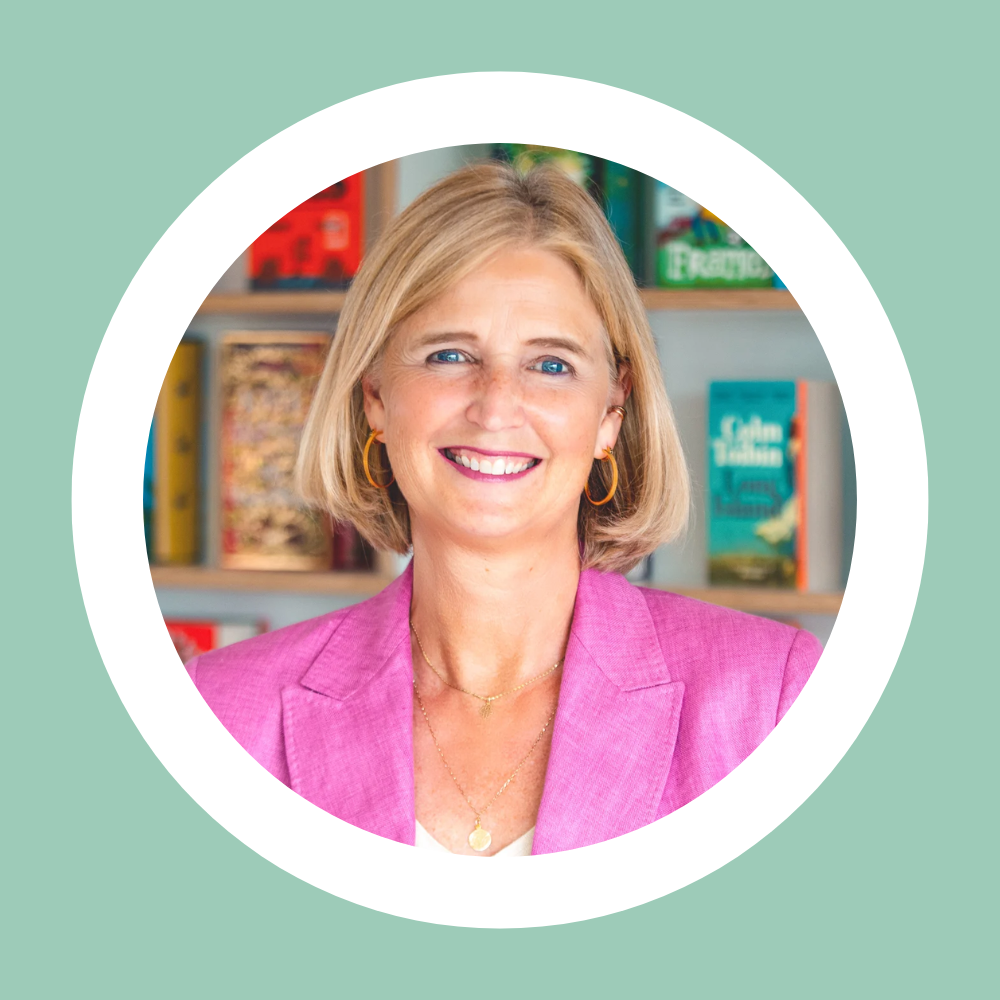
Joanna Prior is the CEO of Pan Macmillan, joining from PRH in April 2022. She has previously served on the boards of The Publishers Association, the Consumer Publishing Council, World Book Day and the Women's Prize for Fiction. In 2025, she was awarded an OBE for services to publishing and literacy in the King’s New Year’s honours list.
She has just finished The Golden Hours, a new instalment of The Cazalet Chronicles, continued now by Elizabeth Jane Howard’s niece, Louisa Young, which publishes in September.
‘Publishing is a resilient business, full of really clever, curious people who want to understand and be masters of change.’
Looking back on your journey to CEO, particularly following your OBE for services to publishing and literacy, what were the most pivotal moments or decisions you made that shaped the way your career looks today?
Two principles have shaped my journey: a love of teamwork and a clear sense of purpose.
I have always been fired up by the energy of smart, committed people. I thrive on bringing together and guiding teams – and I’ve consistently steered towards roles that have allowed me to indulge that and learn from others. For me, publishing is, and always has been, a people business.
Beyond the team, I am driven by the desire to create a real-world impact. Once I worked out that I was motivated by purpose, I let that guide me. Whether that was chairing the Women’s Prize or working with the National Literacy Trust, or jumping out of being an MD at Penguin Random House and becoming a CEO, my decisions haven’t been about what looks good on my CV. They are about finding the opportunities where I can make the biggest difference in people’s lives. I once took a brief, six-month swerve out of publishing into newspapers as the editor of The Sunday Telegraph magazine. It was a long time ago and it ended with me being fired! While journalism is vital work, I couldn’t anchor it to my personal sense of purpose. I quickly rerouted back to publishing, and when I did, I knew it was right for me: the way of working, and the pace, depth and variety of that work.
I keep the purpose element front of mind all the time, because it is really helpful when making decisions, big or small. I constantly ask, ‘Is this the right call? Will this help people to access new books and ideas? Will this result in more books being put into the hands of children?’ And the people part – the team and the allyship side – I think that is just my personality. I like people; I am a massive extrovert. I thrive when surrounded by people in my life generally.
Can you talk us through the biggest changes you’ve witnessed in the industry since you started in publishing?
Well, I have been doing it for a long time, almost 40 years, so there has been a lot of change, particularly in the working environment. It was a very different world when I started, definitely more hierarchical. When I started out, I was on a typewriter, filing copies, being shouted at for coffee, buying lunch… buying tights! But that is just the way the world has changed.
While the technology of the physical book remains brilliantly unchanged and more popular than ever, the digital disruptions have been seismic. While we are still selling as many, in fact more, physical books than we ever have, the smartphone has been a massive disruption – we don’t see it as an enemy, but it has the potential to derail us. We have all had to accommodate that piece of technology into all our lives. Smartphone use has become a massive concern for children in terms of just how much access they have to the world, but we also know that this is where they are reading, listening and making discoveries. And of course, they offer us a brilliant new way to connect our books with readers.
Now, we face AI. It has arrived with a velocity unlike anything I’ve seen, and changed how we think about the skills people need. We have to work at such a pace in order to keep up – in the way we are marketing books, the way that we are discovering things, people’s buying habits. I refuse to be overwhelmed by it. Publishing is a resilient business, full of really clever, curious people who want to understand and be masters of change. With AI, we just have to do it much quicker than we have ever had to before.
‘In this fragmented, fractured world – where people can live in their own sphere very happily and barely encounter an opinion that they do not agree with – we have a fight on our hands: to publish weapons against misinformation.’
You’ve spoken about the vital role publishers play in combatting misinformation and disinformation. Can you expand on this position and how publishers can champion facts in such a fast-moving world?
I truly believe that literacy and embedding a love of reading play a pivotal role in child development. The critical skills that come with reading books and text from an early age – comprehension, empathy, understanding and absorbing information, being able to focus and concentrate – are more than just educational milestones, they are life skills. That is not just about selling books. It’s about helping people to operate in a highly complex world where we are potentially attacked on all sides by those either wanting to sell or mis-sell us something, twist our words, or feed us fake news. The idea that the generation growing up now may not have the tools to decode the world around them is alarming, and it strikes at the heart of our mission.
Our responsibility as publishers is to make sure that the products we are creating, the books that we are sending out into the world, are thoughtfully acquired and rigorously published. There should be no single orthodoxy – diversity of opinion is vital – but we do need accuracy and transparency. The information should be accurate, it should be well researched, and it should be carefully edited. These things really matter.
We are at a defining moment where technology and publishing have to figure out their relationship, but I think it is a moment we can master. In this fragmented, fractured world – where people can live in their own sphere very happily and barely encounter an opinion that they do not agree with – we have a fight on our hands: to publish weapons against misinformation. It has to start early, because if you don’t read at all and you rely on the algorithm for information, you are deeply vulnerable. We are here to make sure people aren't just readers, but masters of their own minds.
When you took up the helm of Pan Macmillan in 2022, you were the only female leader among the Big Five. How did that responsibility shape your approach to the role, both professionally and personally?
It would be dishonest to say I hadn’t thought about it, but there had been women in the Big Five before me as I was coming up through publishing, like Victoria Barnsley at HarperCollins and Gail Rebuck at Random House. In fact, I worked for Vicky when she set up Fourth Estate originally. Now we have Kate [Elton] at HarperCollins, we have Perminder [Mann] at Simon & Schuster, previously at Bonnier — and all the women leading other publishers in the industry, too. There are many strong women running publishing businesses across London and New York too. I am thrilled by that but not surprised. I believe women are great at running businesses!
I think about female leadership a lot. We have published a lot of books on the topic since I have been at Pan Macmillan, deliberately so, because there have not been enough books about female leaders in the past and we are correcting an imbalance. Books by Angela Merkel, Jacinda Ardern and Nicola Sturgeon were all commissioned after I got here, and I really did want us to have a reputation for being a great home for those sorts of books.
But it’s not enough to just publish the books; we have to live the values. I wanted to make sure that we had the most progressive and supportive policies for championing women in their careers. I brought in a fantastic Director of People and Culture, Briony Grogan, and together we have strived to make Pan Macmillan a place where women can build ambitious careers alongside rich family lives. We introduced equal parental leave, with six months enhanced leave for all parents and we won the Working Families Award last year for best employer for mothers. But I am also really aware that the research – and what we see day to day – tells us that women are still carrying the majority of the burden in the home. That might be taking on the lion’s share of childcare, or looking after a family member. There is always more to do on that front, but I am trying to make sure that we are doing everything we can to support women with our policies.
The conversation around work-life balance is now out in the open, and not just when it comes to children. The idea that there is one way of living your life, either domestic or professional, is total nonsense. I was fortunate to have some brilliant female bosses and role models who proved it was possible to have a great career, a happy home life and raise healthy children. While I am acutely aware that the conditions for me were particularly favourable, I don’t believe in a one-size-fits-all template for success. Each generation redefines what good looks like. When I was starting out in the 1980s, people expected me to stop working when I had my child. At the time, I was at a small independent company so had a bracingly brief maternity leave compared to today’s standards – three months was all they were going to give me. We have come a long way since then and my experience would not be acceptable to most people now. It’s a reminder of why we must keep pushing for progress.
‘Be relentlessly curious. I’ve always had a constant hunger to understand more and do more. If you keep asking for more, the world usually finds a way to give it to you.’
What skills, experiences or mindsets do you believe make the greatest impact for women aspiring to senior positions like yours?
You have to genuinely love your work. You don’t drift into a job like this; you need a clear sense of what you want to do with your life. If you want to be a senior person in publishing, in the arts – in the world that I know – success requires staying power. It might not all happen quickly. Looking back, I realise I did quite a lot of roles for quite a long time; I proved myself in each job and took the time to mature into the next challenge, so I would counsel patience: work hard, keep learning and accept that it all takes time. Building a career is a long game.
You also have to be resilient. My job is hard but I don’t mind that; I actually quite like how difficult it is! I have not always felt like this, but I think the older you get, the tougher you get around having to make difficult decisions and disappoint people. I am a sociable person, but if you are going to be the boss, I’m afraid you can’t be everyone’s friend, and you have to be able to step away. You are the person having lunch on your own when everyone else is heading out together, and you have to be okay with that. You have to be able to stay focused on the job and compartmentalise: there might be something hard going on at home and you have to be able to say, ‘I am leaving that at home and I am coming to work and no one can know about that, because I couldn’t run the business if they did.’ That is not for everyone: not everyone either wants to or is able to do that.
But above all: go all in! Be relentlessly curious. I’ve always had a constant hunger to understand more and do more. If you keep asking for more, the world usually finds a way to give it to you.
Leading a major publishing house inevitably involves navigating difficult and high-profile challenges, such as the silencing of author Sarah Wynn-Williams. What is your advice to other leaders who are navigating similar circumstances?
Publishing high-profile, challenging books is one of the most exhilarating parts of this job. It’s where the 'missionary zeal' of our industry really comes alive. There are instances of these books coming from lots of different houses.
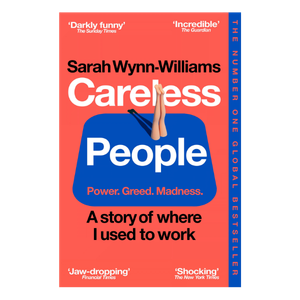
When you take on a project like Careless People you have to hold on firmly to your core values. You don’t publish these books on a whim, you do it because you believe in holding truth to power. They take up a lot of time. They might cost your company quite a lot of money. These are all considerations, so you have to have an unshakeable belief in the author and the book’s value to society.
You also want to assemble a really great team. Whether you are working on a crisis or a secret book, you need the wise counsel of a small group of trustworthy people – a good legal person definitely, but someone with a good sense of the media landscape too. You want somebody who is bold enough to tell you what is right and wrong, because it is a time when you need to listen, and trust and challenge each other too. The other thing is to have a really good relationship with your shareholders, because if it is going to cost money or end up in a legal battle or result in reputational risk, you need to prepare for that. In our case, we needed a really strong relationship with our colleagues in America, and having that cross-border bond – the friendship and camaraderie – certainly made a difference too.
You can’t conjure that kind of trust in the heat of the moment; it takes years. These relationships matter every day, so that when a challenge emerges, you’re ready to act with people you trust implicitly. When a book like Careless People comes along, you have this sense of admiration for your colleagues and it is almost the best thing in publishing. Tensions might run high, but it’s alright because you’re all in it for the right reasons, that’s when we’re at our best.
‘If we are not standing up for the power and importance of books and reading, then who will?’
Looking ahead, what do you hope your legacy at Pan Macmillan will be, for the company, the industry and for the next generation of leaders?
My mission is simple: to build a sustainable, successful and happy business that publishes amazing books. As well as the people who work at Pan Macmillan, we have a huge responsibility towards our authors and illustrators. I reinforce that message all the time: ‘We are here for and in service of them. Whatever you’re doing every day, you should be thinking about your authors and your illustrators. If you have not been thinking about them and what you can do to sell another copy of their book today, then you have not been doing your job.’ Whatever your role, that is what we are here to do. I want my legacy to be that Pan Macmillan is an amazing place to be published: that authors and illustrators feel they have been looked after, that their books have been beautifully packaged, carefully edited and published with genuine flair and thought.
Equally, I want Pan Macmillan to be a great place to work. I want our people to feel challenged, well-rewarded, inspired. I want them to meet friends for life here and I want them to say we have the best Christmas parties (which I believe we do!). We strive for excellence and high performance, but this should be balanced with the joy and satisfaction that comes from a life in books.
Leading this business is a massive privilege and I feel very lucky, but I’ll admit that having all these people depending on me is occasionally daunting. Beyond these walls, I take leadership across the industry seriously. One thing I have really tried to do is to bring the publishing industry, literacy and social impact closer together. If we are not standing up for the power and importance of books and reading, then who will? Ultimately, I hope people say that I helped them understand the true purpose of being a publisher: making sure the whole world cares about books as much as we do.
Finally, tell us about another woman in publishing who inspires you.
That is an impossible question – there are too many to name! But I would like to take this opportunity to recognise the women leading our networks at Pan Macmillan. These chairs – who all happen to be women – are doing this meaningful work alongside their day jobs, and they are helping us to build a culture of inclusivity and joy within the business and fostering deep respect across the company. Our networks comprise Rise, our race and ethnicity network; Pride, our network working towards achieving equality for LGBTQIA+ colleagues; Pause, our menopause network; Mind the Gap, a network for colleagues from lower socio-economic backgrounds; the Ability Network, that welcomes any person who is, directly or indirectly through caregiving, affected by any type of disability or physical or mental health condition; and the Publishing Passports Network, open to anyone who has an international connection.They have also been encouraged and nurtured by our Head of Diversity, Inclusion and Social Impact, Jodie Williams, who has been instrumental in giving them rightful status within the company. I am so grateful for all that they do.
The FLIP are proud supporters of independent bookshops and are an affiliate of Bookshop.org. If any of our recommendations take your fancy, we'd be so grateful if you click through our links directly to make a purchase as we earn a small commission - all of which goes back into bringing The FLIP's mission to life and to allow us to keep bringing you the content you want to see.
